
R.Jinks Consulting
Regulatory strategy that gets you to market.
Compliance programs for mobility start-ups and new entrants, from requirements definition through certification and homologation, and into production.



About
Safety and compliance, built from scratch.
I've spent over two decades building compliance programs, at legacy OEMs and at start-ups with nothing in place yet. I know what the agencies look for, what documentation survives a defect investigation five years later, and how to keep engineering moving while that evidence gets built.

Services
What I can do for you.
Outcome-focused support across the full compliance lifecycle.
Regulatory strategy and roadmapping
Market entry analysis, compliance gap assessment, and a multi-market roadmap tied to your program timeline.
Government affairs and agency navigation
NHTSA, EPA, CARB, EU and EC, and UN WP.29. Direct engagement, petition strategy, and technical rulemaking support.
Certification and homologation
Test planning, third-party lab and technical service coordination, and submission preparation through to approval.
Functional safety and cybersecurity
ISO 26262, ISO/SAE 21434 and ISO 24089 governance, with UN R155 and R156 alignment for connected architectures.
Compliance governance
Documentation systems holding traceable linkage between requirements, test execution and certification evidence.
Interim and fractional leadership
Step in as Technical Program Director or Head of Compliance with full strategic ownership while you build the team.
Track record
First-of-a-kind programs, delivered.
World-first certifications, concurrent global launches, and regulatory language adopted into international standards.
FMVSS self-certification for an X-By-Wire SDV
Architected the global safety and compliance strategy at REE Automotive for next-generation x-by-wire SDV platforms, and achieved the world's first FMVSS self-certification for an X-By-Wire Software-Defined Vehicle.
Regulatory language adopted into UN ECE standards
Chaired the IMMA Brakes Working Group, negotiating with industry parties and contracting governments in Geneva to shape binding international safety standards.
Indian Motorcycle brand relaunch at Polaris
Delivered the concurrent global launch of the revived Indian Motorcycle brand, a first for Polaris, and established Indian as a stand-alone entity in the portfolio.
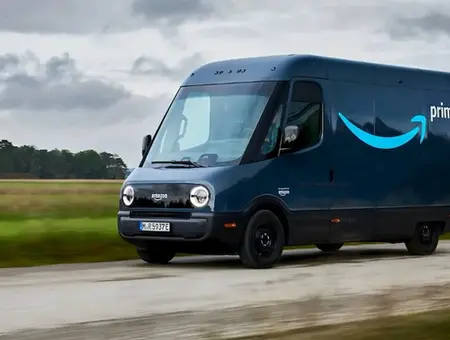
Rivian R1T, R1S and Amazon EDV
Defined the multi-market compliance strategy for three high-visibility consumer and commercial EV programs.
Global reach
The regimes that decide your launch.
Direct experience with the agencies, technical services and approval authorities that gate market entry.
United States & Canada
Self-certification, not type approval. The manufacturer carries the risk without third-party endorsement.
UN ECE
Type approval to UN Regulations, WP.29 in Geneva.
Europe
Whole vehicle type approval and conformity of production.
China
CCC certification and GB, GB/T standards compliance.
Japan and rest of world
PI, PHP and TD routes, plus market entry strategy for emerging markets.
How the work is built
Nobody improvises greatness.
The Castellers de Vilafranca raise historic towers by building from the base: planning, practice, coordination, and more than a little risk tolerance. Regulatory compliance is built the same way: planned to full height before the first level goes up, and carried through all six phases.

Requirements definition
Name every market before architecture freeze. FMVSS, EPA and CARB, UN ECE and China CCC each change the design space.
Design
Requirements allocated down to systems and components, with the safety case under ISO 26262 and 21434 built alongside the hardware.
Validation
V&V evidence planned as a deliverable with its own schedule, budget and test slots. Labs book out. Prototypes are scarce.
Certification and homologation
The US is self-certification and you carry the liability. The EU, UN ECE and China CCC require type approval, each on its own timeline.
Market release
Labeling, owner documentation, manufacturer and importer registrations, and in-service reporting obligations.
Ongoing production
Conformity of production, running changes, field data and recalls. Job 1 is not the finish line.
The market
Nine are gone. Six are still building. The difference wasn't cash.
Fifteen North American start-up OEMs, five years after the SPAC wave. Building a vehicle was never the hard part… proving it's legal, on time and on budget, is. The survivor's playbook: all four points are regulatory.
Scope the regulatory requirements from day one
Safety, emissions and market access define the design space. Find a requirement after freeze and it isn't a delay, it's a redesign…
Treat V&V evidence as the deliverable
The US doesn't type-approve. You self-certify, and you carry the liability for getting it wrong.
Begin with the end in mind
Decide every market you'll sell into before the architecture freezes. Retrofitting approval later costs more than the original build.
Use the safety work already done for you
FMVSS and the UN GTRs encode decades of crash and field data. Don't re-derive it. Apply it, and spend your energy on the product.
Why work with me
AI can read the rule. It can't carry the risk.
I use AI every day, for research, first drafts and cross-checks. Compliance decisions are rarely that clean.
Most compliance answers are not yes or no. They are yes, on this evidence, at this cost, carrying this much exposure. Deciding how much exposure a program can carry is judgment, and that is the part that does not automate.
Let's work together
How we can engage.
Structures to match where you are in development.
Compliance audit and gap analysis
A focused review of your compliance posture against target market requirements, with a prioritized action plan.
Project-based engagement
Defined scope, timeline and deliverables for a specific milestone: market entry, certification, or governance build-out.
Fractional and ongoing advisory
Senior technical authority on retainer, structured around what the program needs while you build the team in-house.
Scope note. Engagements are advisory. A design gap analysis is a regulatory assessment. Determining the specific design changes that close a gap requires coordination with your engineering resources.
Contact
Ready to talk about your program?
Start with a no-obligation conversation about where you are and where you're headed.
Tell me a little about your program and the regulatory discipline you need help with.